
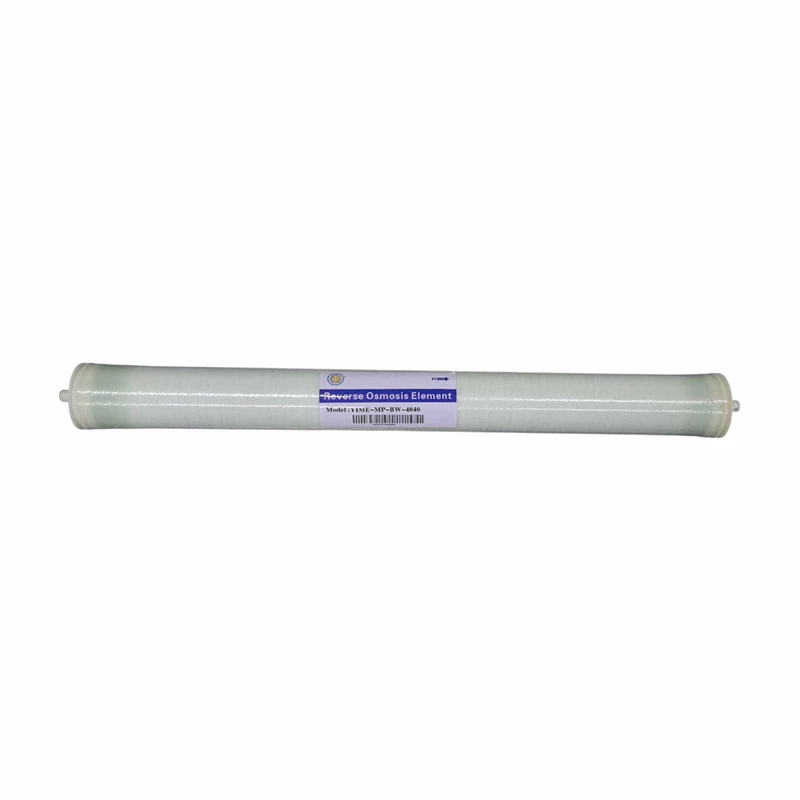
Industrial RO Membrane 4040
The Industrial RO Membrane 4040 is an advanced 4″ industrial-grade RO membrane element, engineered specifically for high-salinity wastewater treatment and water reuse applications across power plants, steel mills, electroplating facilities, petrochemical industries, coal chemical processes, textile production, paper manufacturing, and landfill leachate treatment.
Description
Industrial RO Membrane 4040
The Industrial RO Membrane 4040 is specially engineered to resist contaminants such as colloids, organic matter, and microorganisms. Compared to standard membranes, they offer enhanced durability, lower maintenance frequency, and are better suited for complex water sources. Below is a comprehensive comparison:
1. Membrane Material and Surface Structure
| Item | Anti-Fouling Membrane | Standard RO Membrane |
|---|---|---|
| Surface Modification | Enhanced hydrophilicity and smoother surface through charge and structural optimization, reducing foulant adhesion | Unmodified surface; more prone to accumulation of organic matter and colloids |
| Material Enhancement | May include nanomaterials or modified polymer cross-linking for added protection | Conventional aromatic polyamide layer |
2. Fouling Resistance
| Item | Anti-Fouling Membrane | Standard RO Membrane |
|---|---|---|
| Resistance to Colloids & Organics | Strong; ideal for water sources with high fouling potential | Weak; easily blocked and fouled |
| Biofouling | Biostatic properties reduce bacterial growth and biofilm formation | Susceptible to microbial contamination |
| Application Range | Suitable for landfill leachate, electroplating wastewater, coal chemical wastewater, etc. | Suitable for stable feedwater with low pollution, such as tap water or spring water |
3. Operation and Maintenance
| Item | Anti-Fouling Membrane | Standard RO Membrane |
|---|---|---|
| Cleaning Frequency | Low; longer cleaning intervals with higher cleaning recovery | High; frequent cleaning with lower recovery rates |
| Service Life | Generally longer (depending on conditions) | Shorter, especially in high-fouling environments |
| Overall Operating Cost | Slightly higher initial cost, but lower in the long run | Lower upfront cost, but higher maintenance expenses |

Reviews
There are no reviews yet.